Monya Rowe Gallery
New York City hosts a multitude of art galleries, mainly in Chelsea. But today, with our primary destination the Morgan Library on the east side, we stop at the Monya Rowe Gallery on East 30th because it’s closer to Penn Station.
We have trouble finding the gallery because it resides inside an anonymous building, with a security guard sending us to the third floor where we wind through a hallway until finding #304. Inside, the gallery takes up only one room with a dozen or so paintings on the walls from an artist named Lily Taylor who paints New York domestic scenes on wood. They are worth viewing, for sure, but an even more interesting sight appears by peering out the window (next to the radiator on a cold day) across an alley to a space with sewing machines and clothes hanging on racks, a garment-district workshop, a little niche where people still toil inside aging buildings.
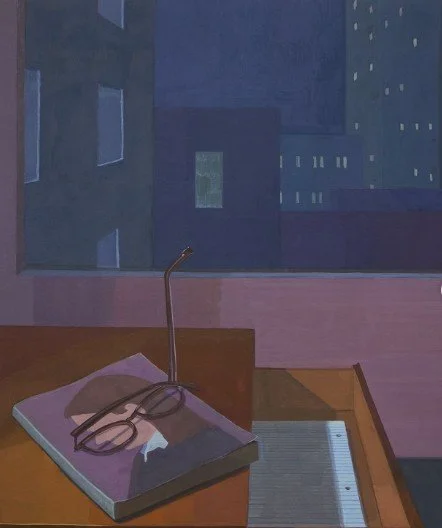
“Nightstand,” by Lily Taylor, casein on panel, 20 by 16 inches
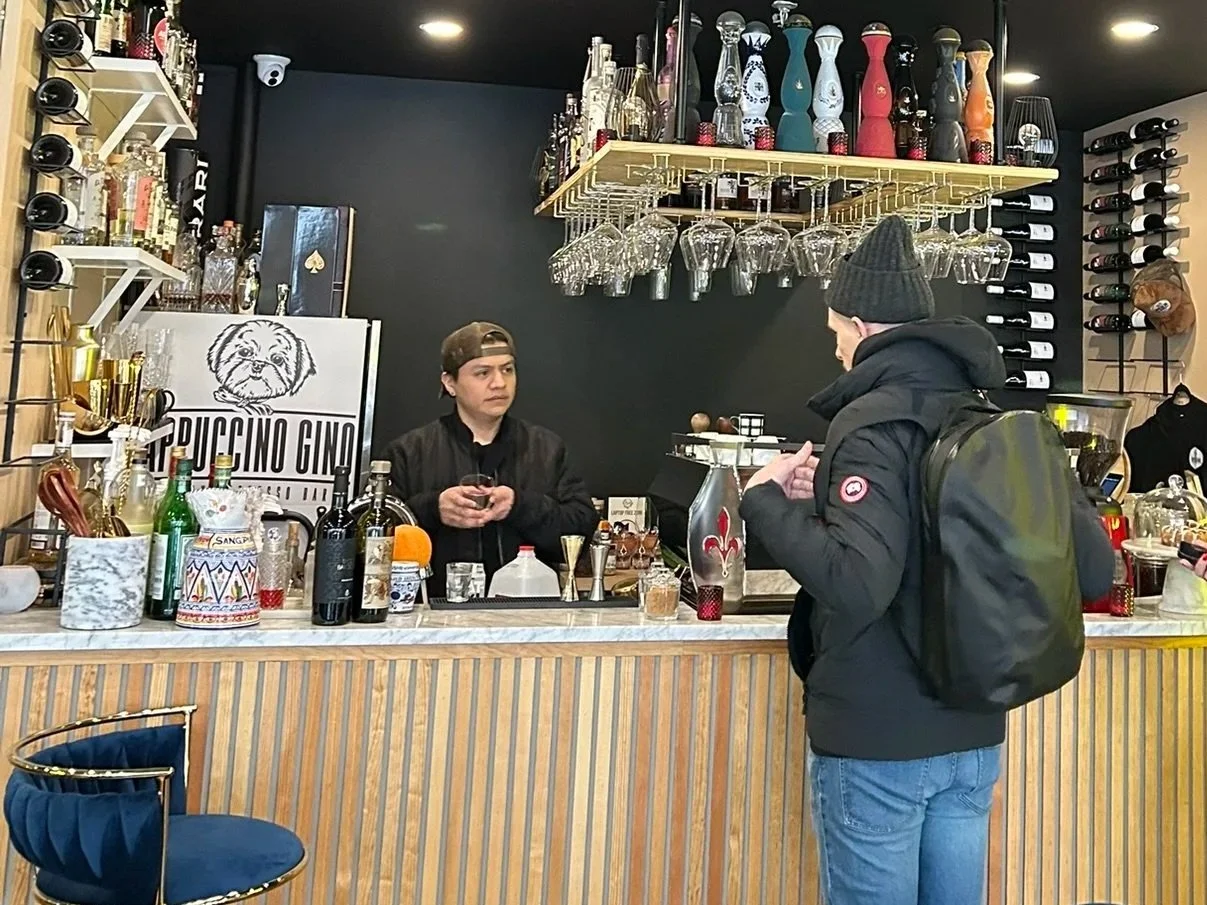
Cappaccino Gino
Afterward we walk across town to the Morgan. Along the way, we stumble on one of those random New York gems that make walking around the city worthwhile, a little coffee/cocktail café on East 33rd called Cappaccino Gino. There, we snack on croissants and lattes in a tight but beautifully decorated space.
Morgan Library
Then on to the Morgan Library & Museum, a true city treasure, especially after the 2006 renovation that added 75,000 square feet of exhibition and atrium space (including a bar). Though the star of the show remains the original library and J.P. Morgan’s study, a recent addition is worth visiting: the Librarian’s Office, the workspace of Belle da Costa Greene, who managed J.P.’s extensive collection of rare books and manuscripts. An African-American, she commands historic significance — beyond her collecting experience — because she passed for white, which may or may not have been known to J.P. Morgan during those racially charged times.
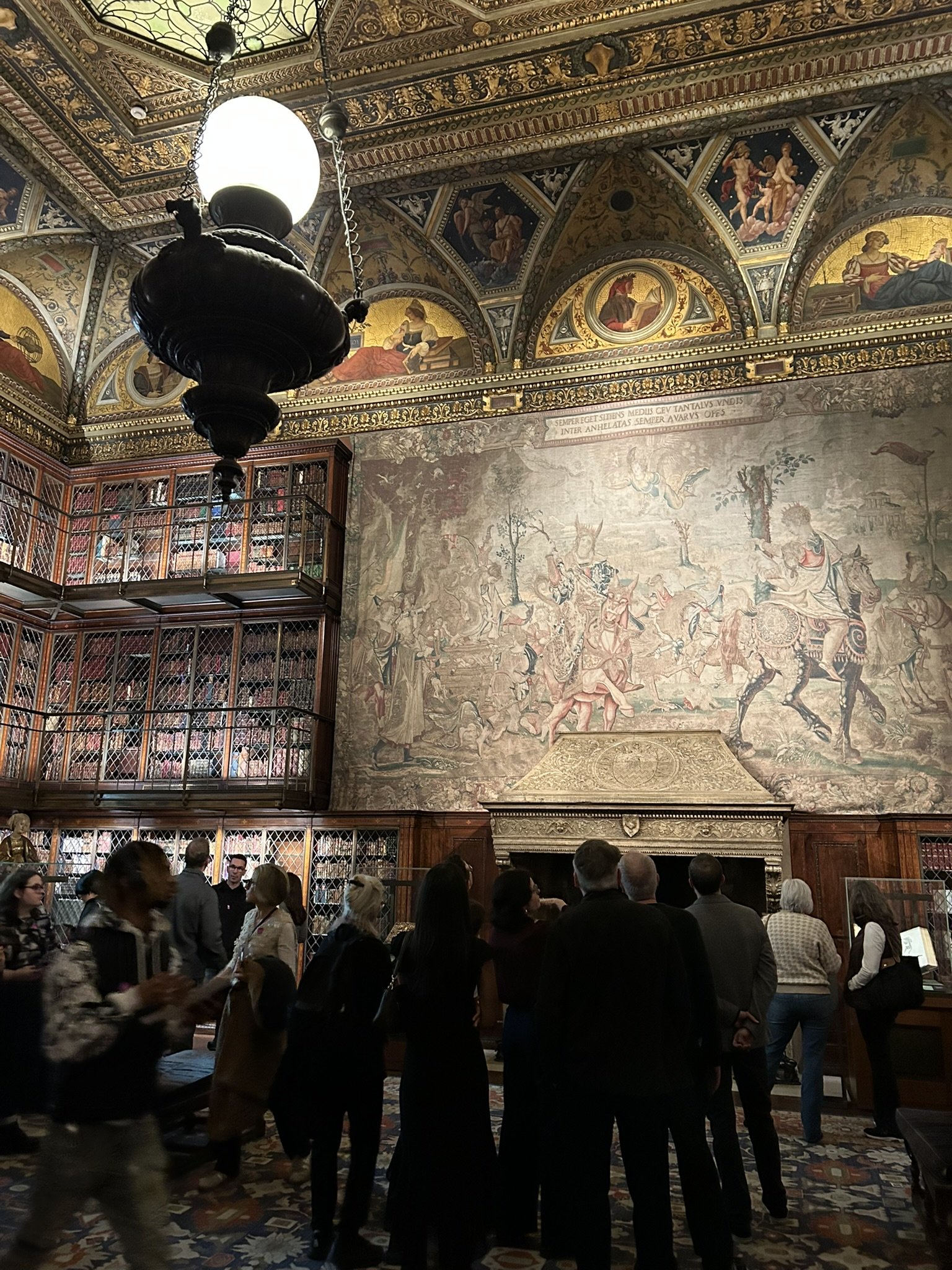
Tapestry woven by Willem de Pannemaker (Flemish, ca. 1510–1581), after a design by Pieter Coecke van Aelst (Flemish, 1502–1550); 1534–36; wool, silk, and gilt-metal wrapped thread; 12 x 24 feet (4.43 x 15 m).
Purchased by Pierpont Morgan, 1906
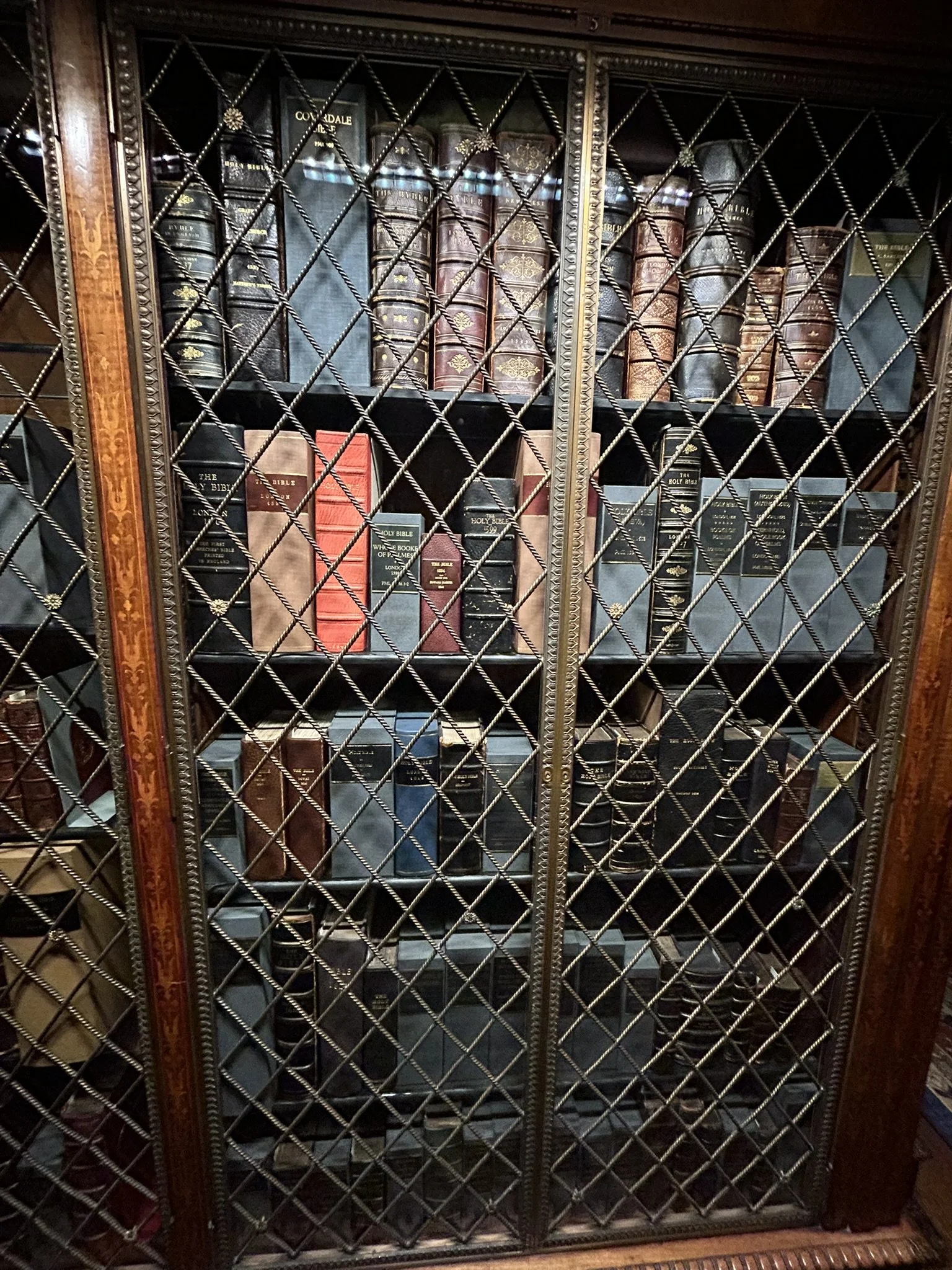
One of several bookcases of Bibles
Mother’s Ruin
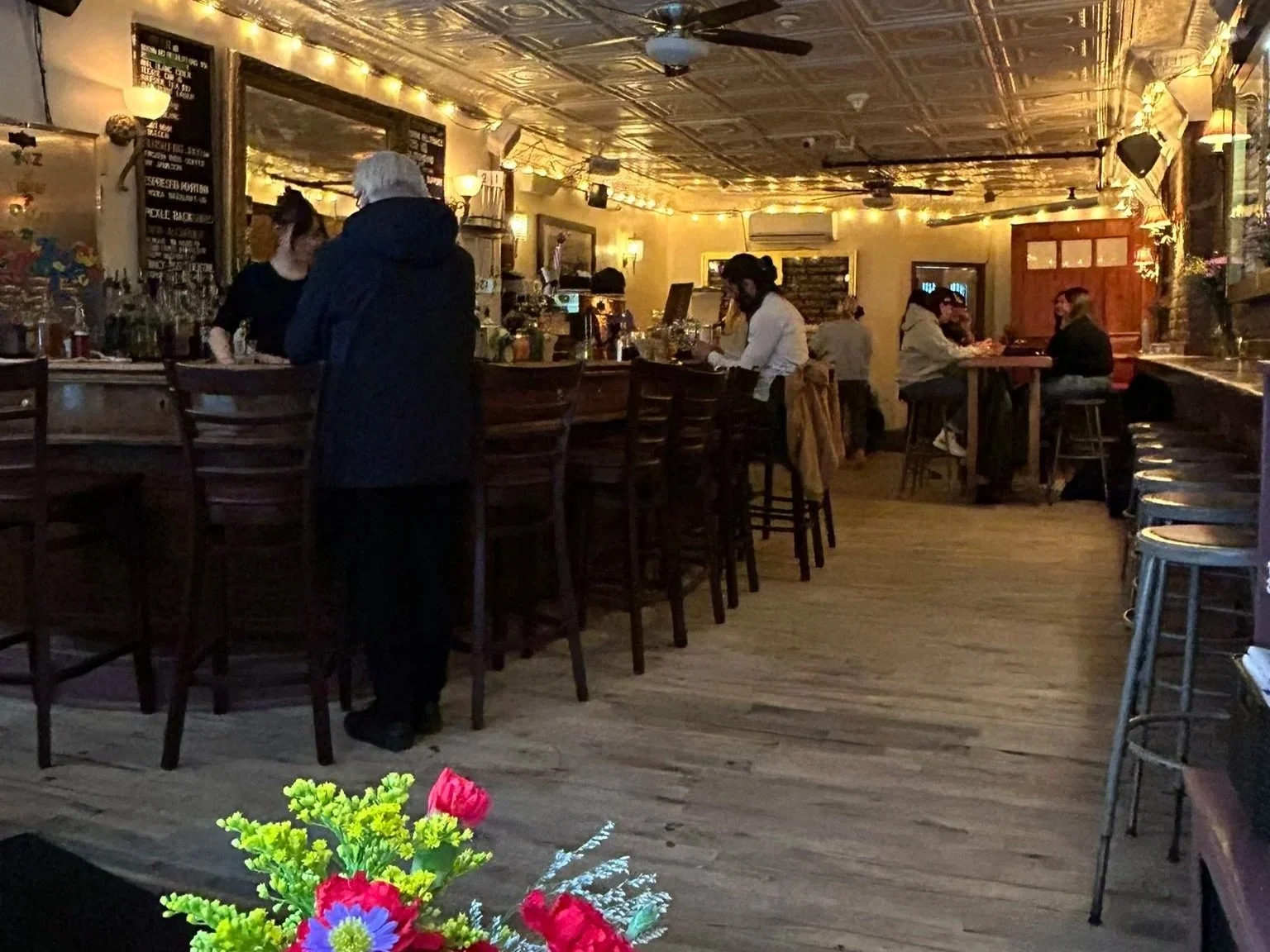
Dozens of people seem to enjoy hanging around the central atrium, not a bad place to linger, but we want a drink before dinner. Since our restaurant is downtown, we catch a subway to Spring Street and Mother’s Ruin, a funky bar that specializes in frozen drinks, an odd choice on a cold day, but we’re here to explore.
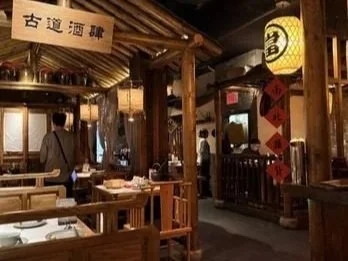
Che Li
Then a ten-minute walk uptown to St. Mark’s Place and our favorite Chinese restaurant, Che Li. Cuisine at Che Li derives from the Jiangnan region of Shanghai, specializing in seafood with mild sweet-and-sour flavors. Crispy smoked fish makes a fine appetizer, and the steamed prawns with glass noodles are highly recommended. The interior of Che Li has been designed to resemble a small Chinese village, creating an intimate atmosphere without kitsch.