
Though known for booing Santa Claus and mugging the hitchhiker robot, Philadelphia is also the City of Brotherly Love, and we travel there to visit America’s constitutional roots in search of some admittedly whitewashed optimism.
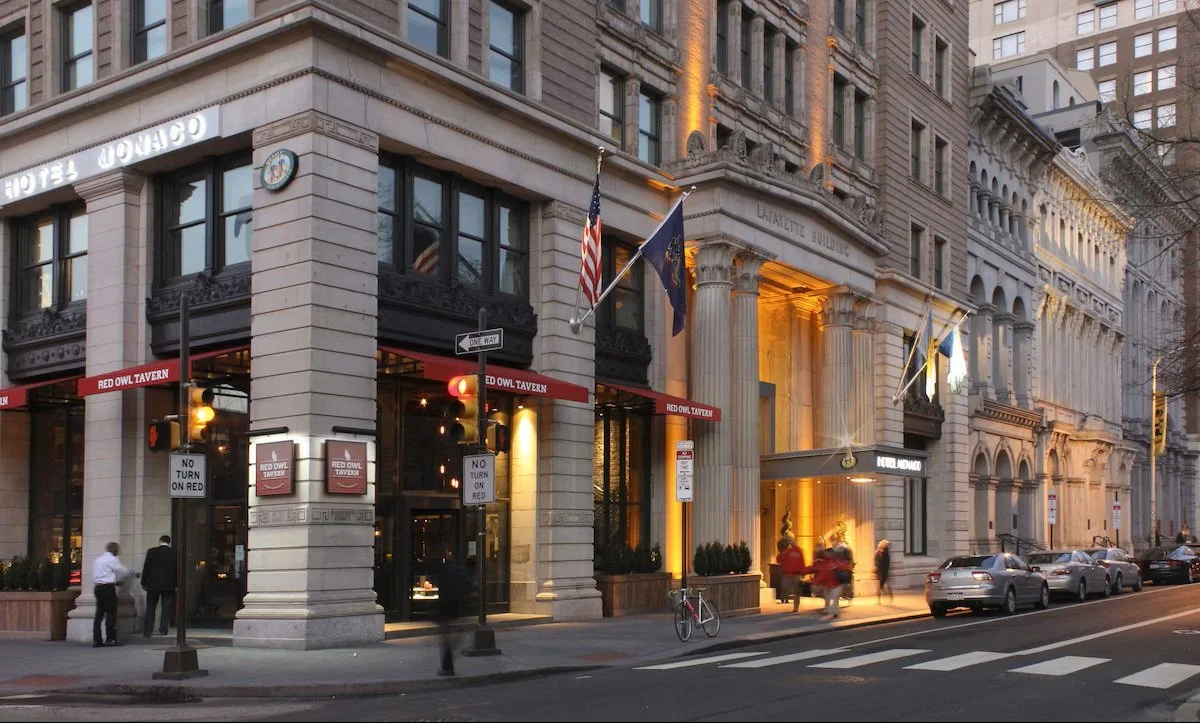
Kimpton Hotel Monaco Philadelphia
Our hotel of choice sits steps away from Independence Hall and the Liberty Bell, two prime destinations. Advertised as luxury, the Kimpton Hotel Monaco Philadelphia lives up to this claim but with prices considerably lower than New York City hotels, plus it serves complementary wine in the lobby each day at 4 PM. A hit!
Independence Visitor Center & Tour Guide
Arriving in the afternoon and ready to go, we head across the park to the large Independence Visitor Center and get talked into hiring a guide, and even though the guide can’t get us into any buildings (other than showing a tricky way to view the Liberty Bell without standing in line), he’s entertaining and knowledgeable and helps us get a lay of the land, including Washington Square, behind and adjacent to Independence Hall, originally a burial ground and now a memorial to fallen soldiers from colonial times.

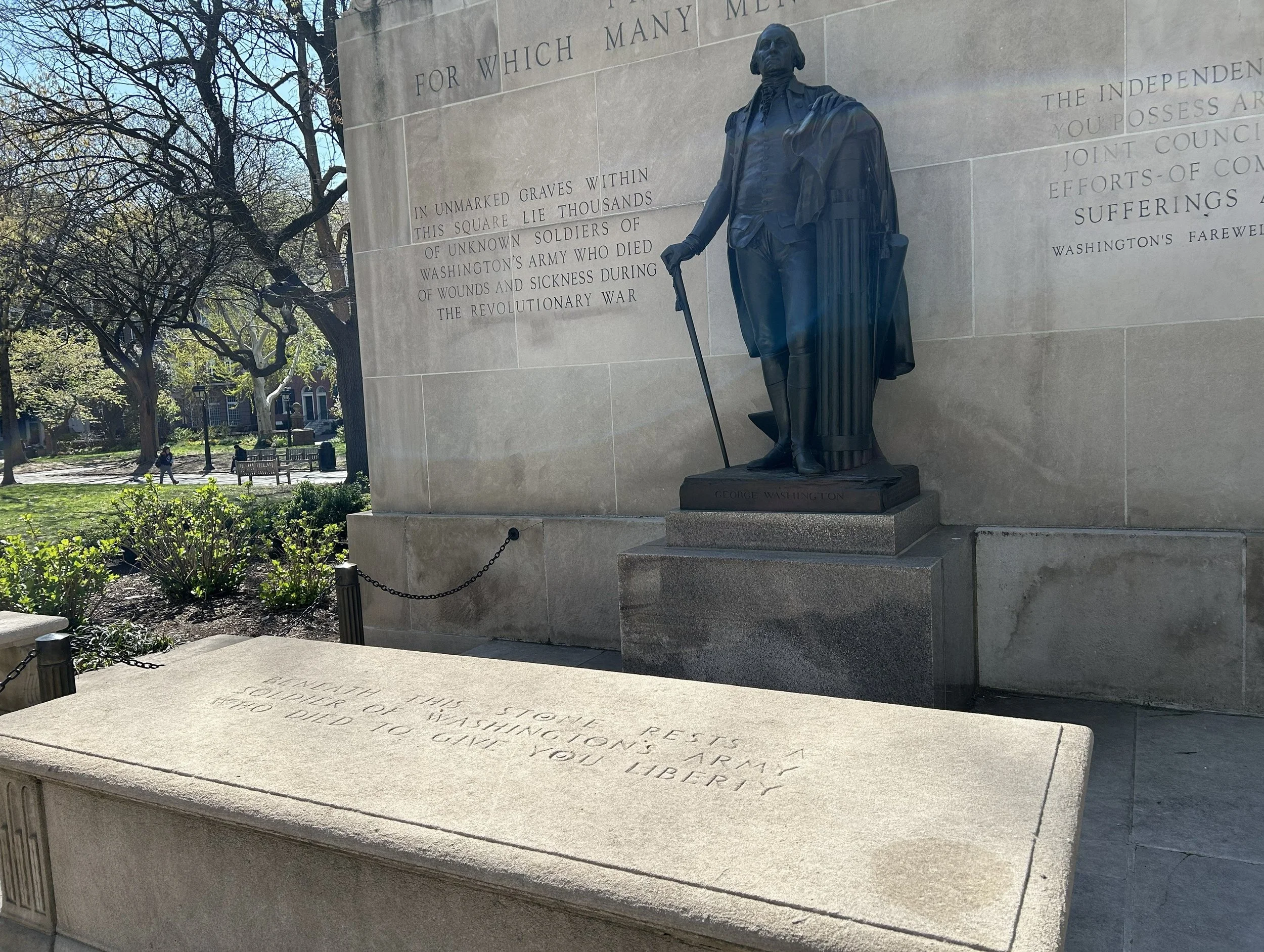
“Beneath this stone rests a soldier of Washington’s army who died to give you liberty.”
Marrakesh
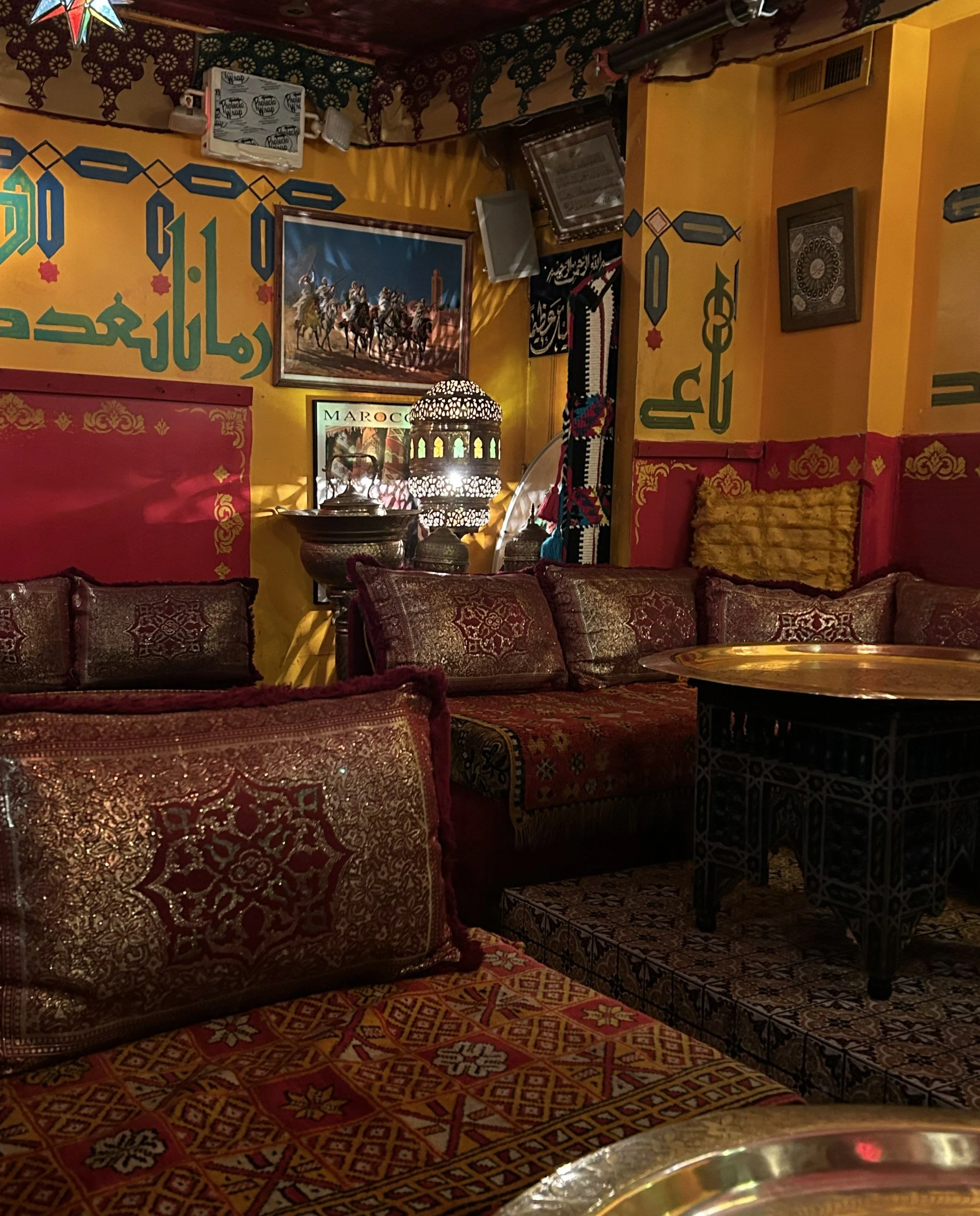
Back at the hotel, we polish off our complimentary wine before heading on foot for Marrakesh, a Moroccan restaurant just off South Street of pop music fame (“Where do all the hippest meet, South Street, South Street”). Marrakesh serves an abundance of tasty food while we lounge on pillows and get entertained by a somewhat long-in-the-tooth belly dancer who is probably very good at what she does, if only we knew the difference. The owner is a visible presence, a good sign for any restaurant. We leave sated and enjoy a leisurely walk back to the hotel.
Arch Street Meeting House
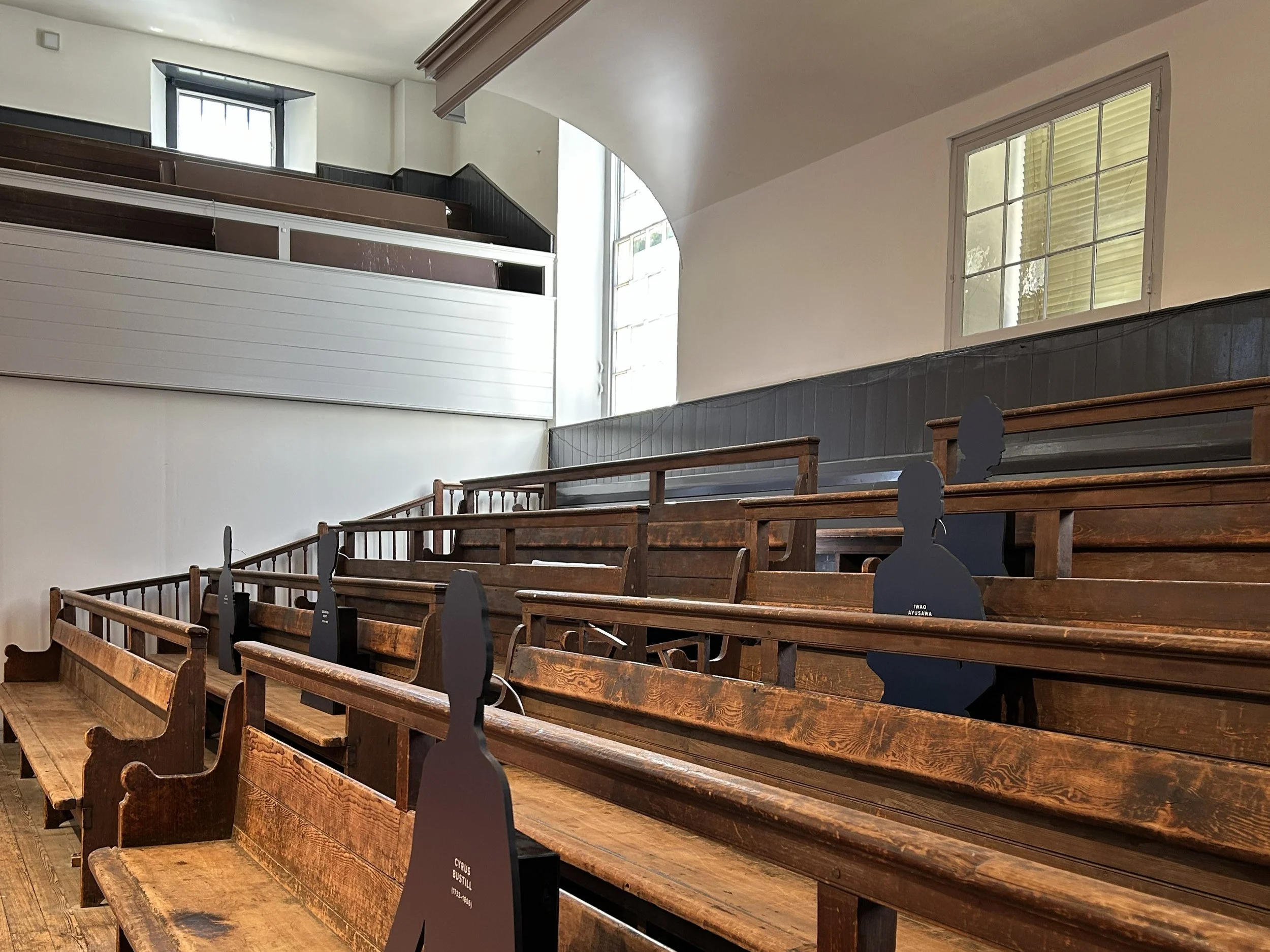
The next morning, on our way to the Betsy Ross House and Elfreth’s Alley, our main destinations for the day, we happen on a large brick structure that turns out to be a highlight of the trip. The Arch Street Meeting House occupies almost an entire block on Arch Street and has been in continuous use as a Quaker place of worship since 1682. Inside are two large meeting rooms, with seating on all four sides. The square, plain architecture speaks to something deep in Protestant America, minimal hierarchy and direct communication between members and to God without intermediaries. Ghosts abound.

Betsy Ross House
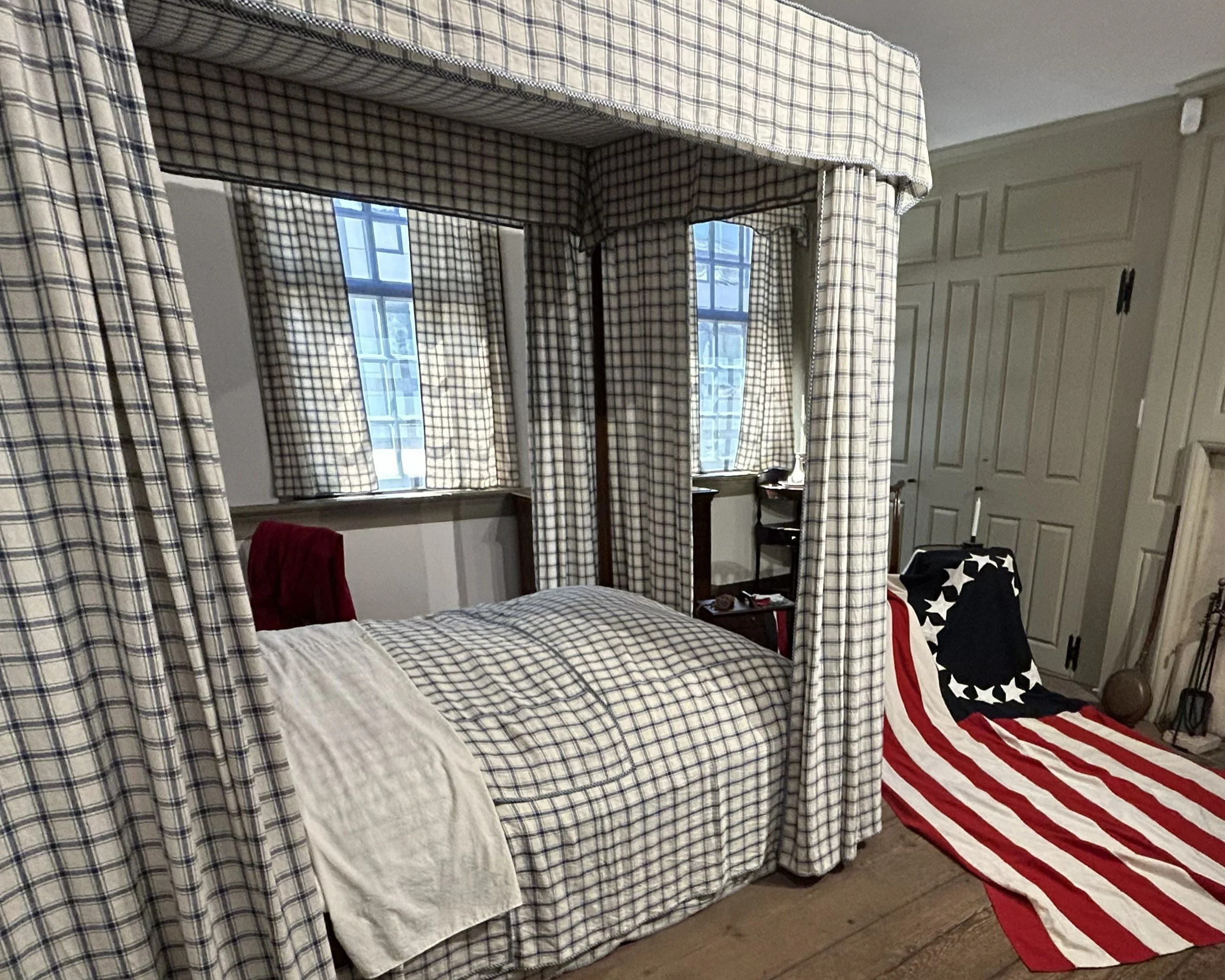
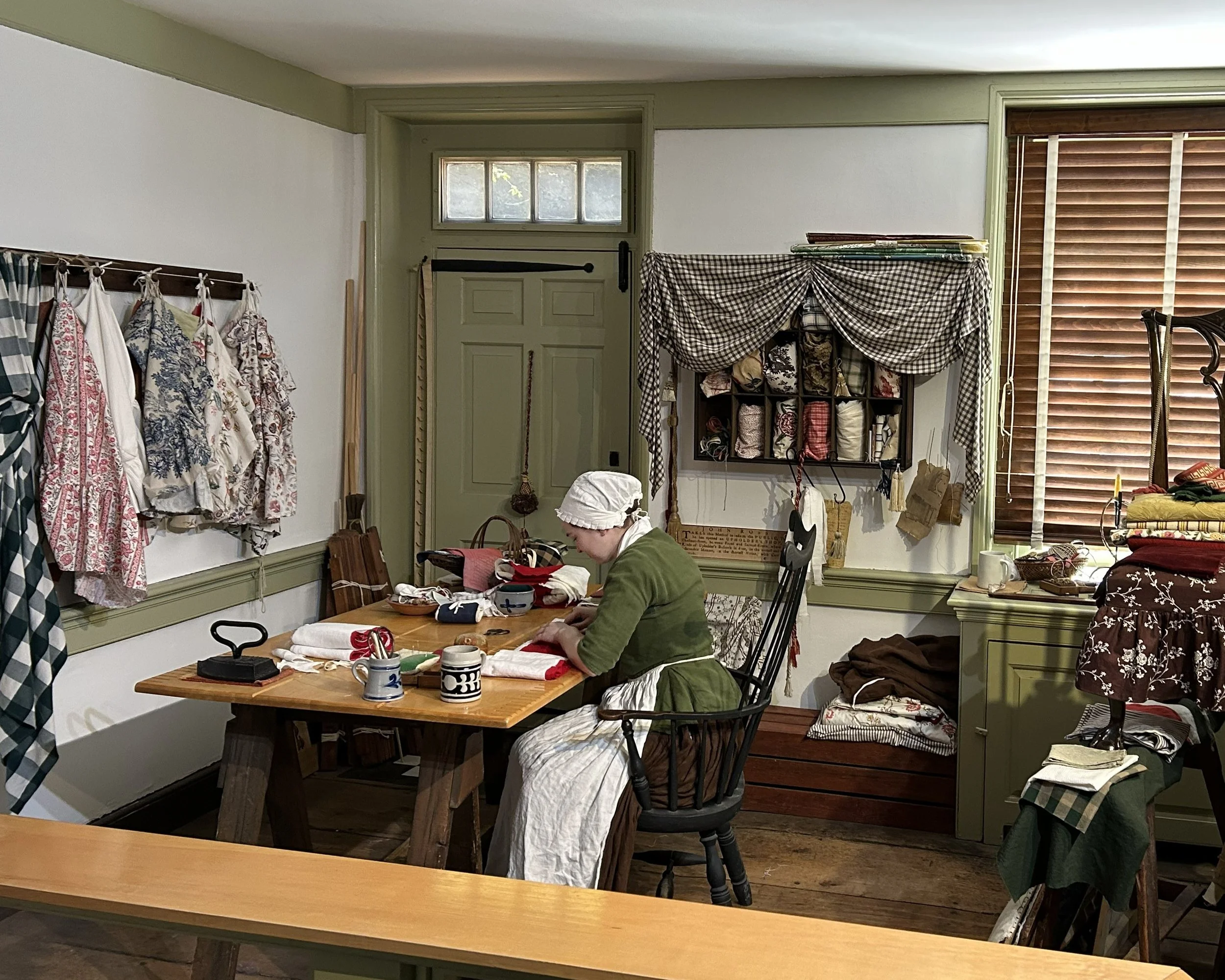
The Betsy Ross House is worth a visit as it shows how a small-business person could make a living in colonial times. Betsy Ross was a seamstress who ran her shop out of this house, chosen by George Washington and other influential leaders to sew the first American flag, quite a feat when you see the size of the flag. Betsy’s life story is worth studying, as she endured much hardship (though not atypically for back then) and survived well into her 80s.
Elfreth’s Alley Museum
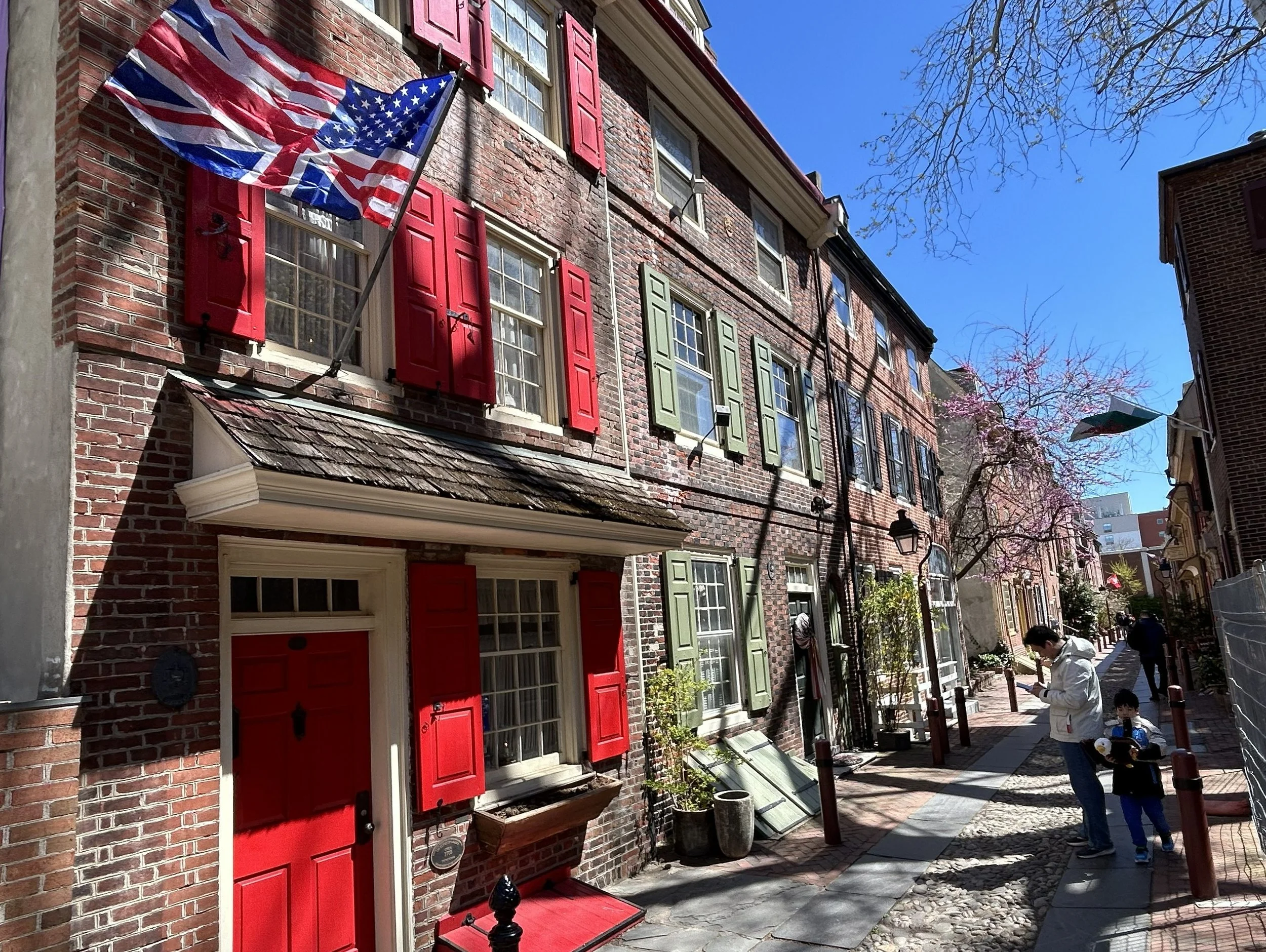
This popular and picturesque street full of colonial-era row houses is jammed with tourists. A working-class street for most of its history, the houses now sell for millions, though living in such a compact place while hordes of tourists walk up and down the street is surely only for connoisseurs of historical architecture. The Elfreth’s Alley Museum is full of artifacts and other colonial points of interest.
Independence Hall
They came from all nine colonies to Independence Hall to debate and then sign both the Declaration of Independence and the U.S. Constitution. It is hallowed ground for most Americans, the place where plucky rebels broke from an empire, under threat of hanging, and hammered out a workable document designed to stymie tyrants. We enter for free by arriving at the back at 9 AM and waiting for the doors to open. The crowds are quiet inside, soaking up the history, a fitting end to our visit.
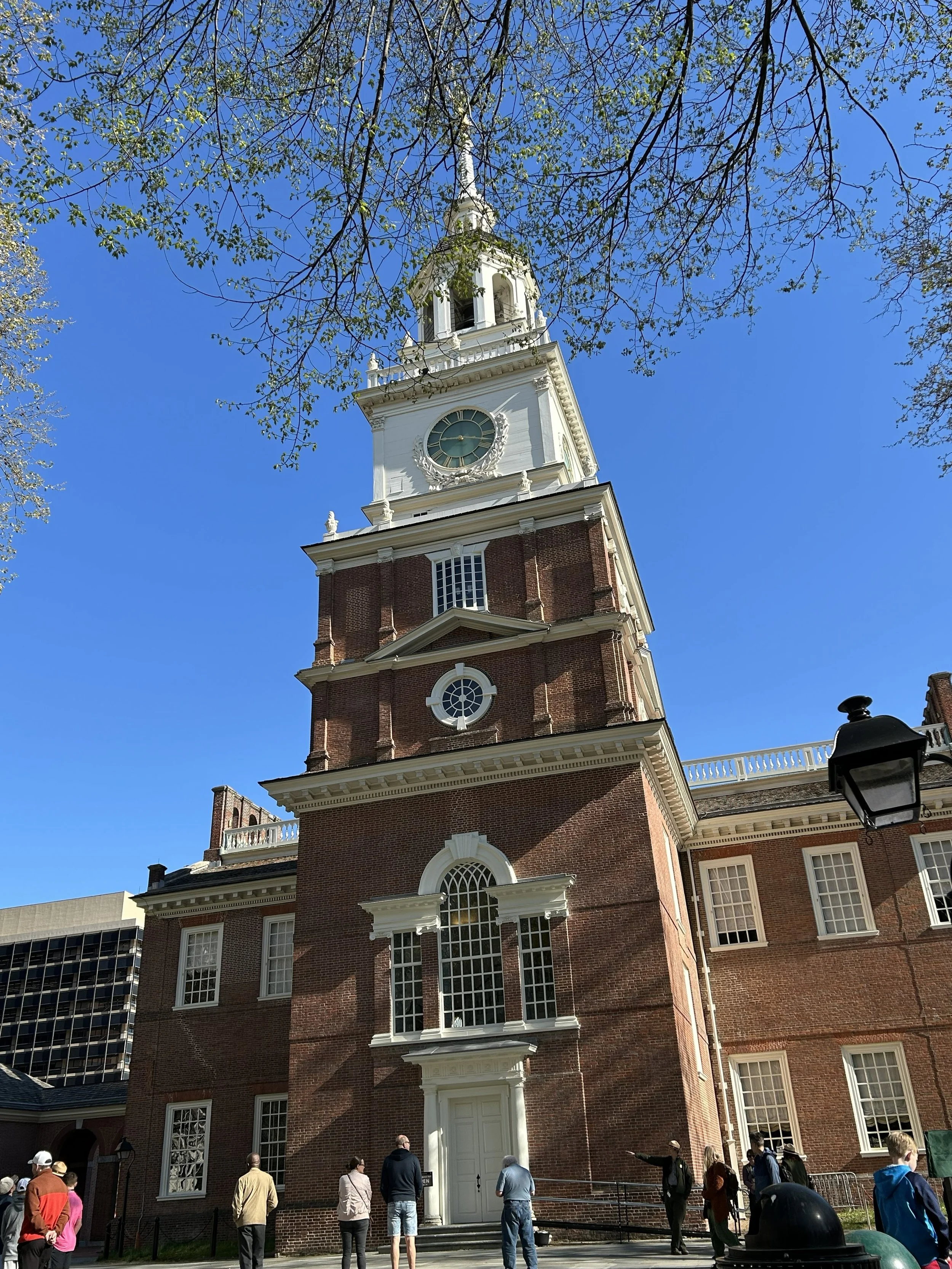
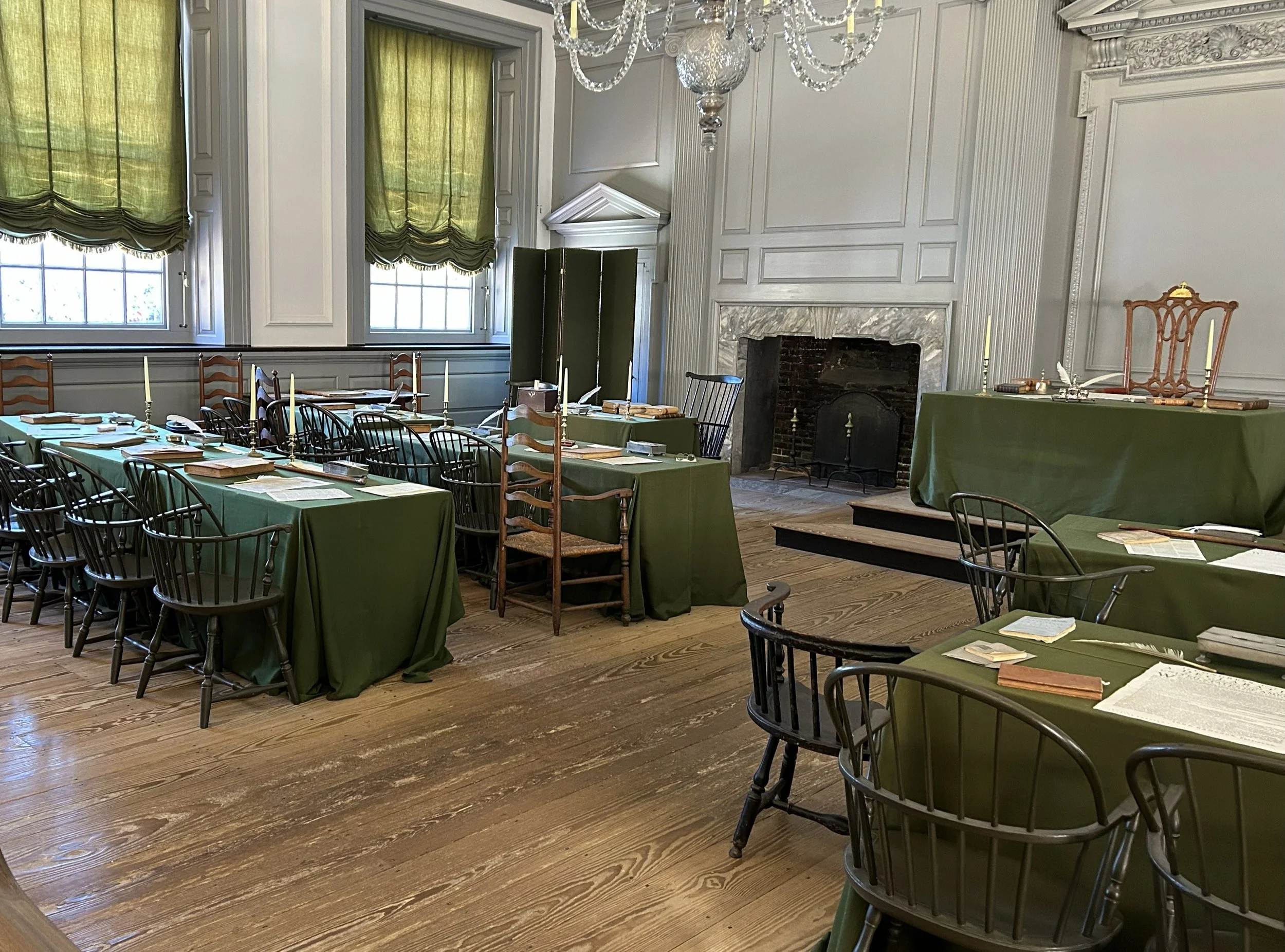
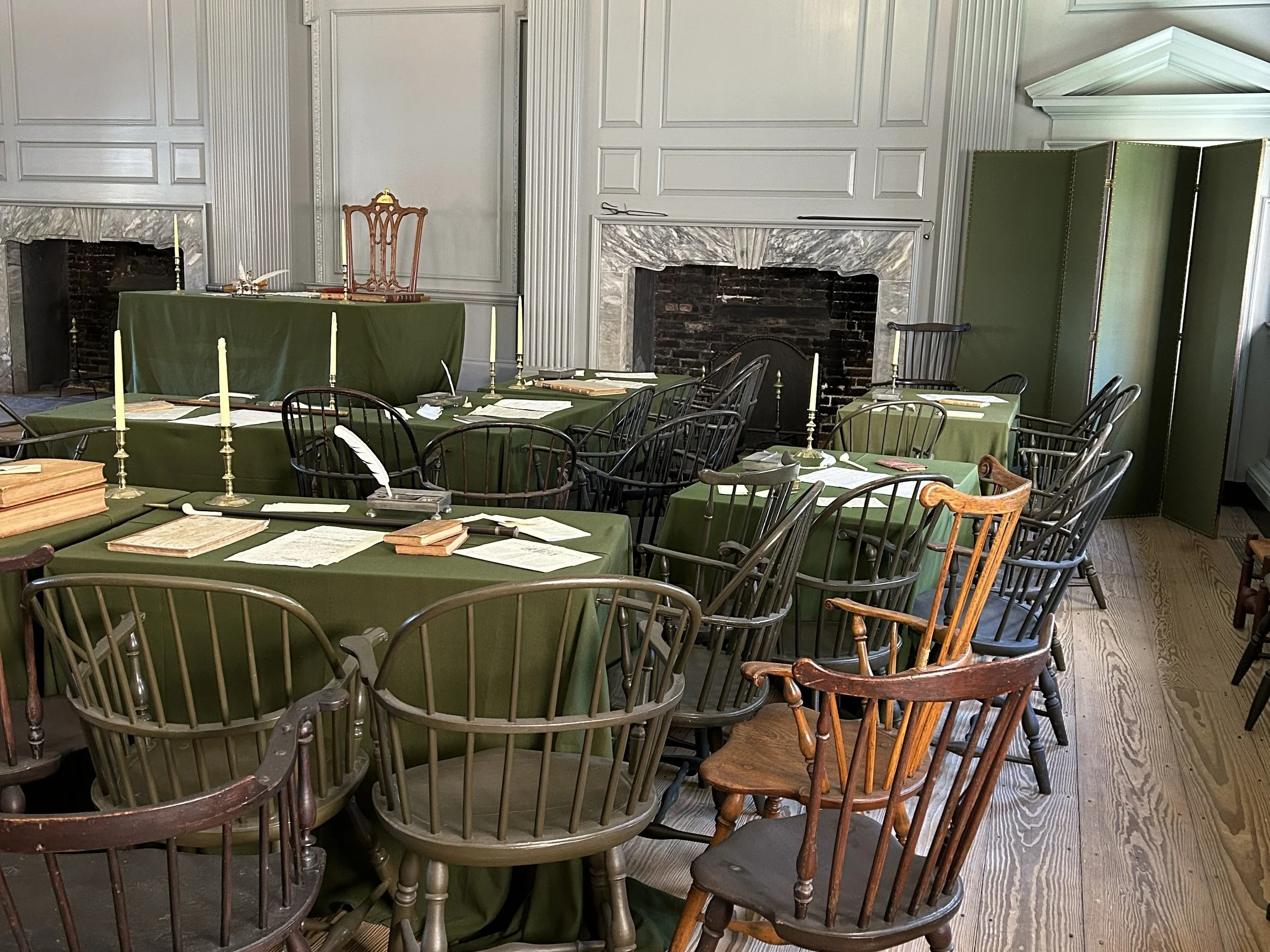
George Washington sat at the front of the room, facing delegates from each of the nine colonies who sat in groups at tables covered with olive green cloth.